
Spring Semester 2026: PAFNYS Campus Organizers Fight for Peace in their Communities and Beyond!
By Margaret Engel, Director of Policy and Outreach | June 1, 2026
This Spring semester, the student chapters of the PAFNYS Campus Organizing Program led their organizing efforts with resilience, courage, and creativity. Students responded quickly to rapidly-changing developments in the domestic and foreign policy landscape, continuing to organize events based around ICE presence in their communities, the war in Iran and Lebanon, and the ongoing genocide in Palestine. During this semester in particular, student organizers leaned on field experts, academics, and colleagues connected to PAFNYS to educate their chapters on a number of issues.
Despite the challenges of student organizing today—administrative crackdowns, juggling chapter efforts with schoolwork, and confronting bigotry of all forms on their campuses—the students did a fantastic job as individual organizers and as a unified team of peace activists. While we wish there were more chances to step outside of our virtual meeting place, many organizers of the program came together for our 2026 Student Peace Conference, where they participated in field expert-led workshops and discussions covering a broad range of topics around peace organizing. Several students also represented PAFNYS at the first week of the NPT Review Conference at the United Nations. They were able to connect with other student organizers from across the globe and even to participate in side events.
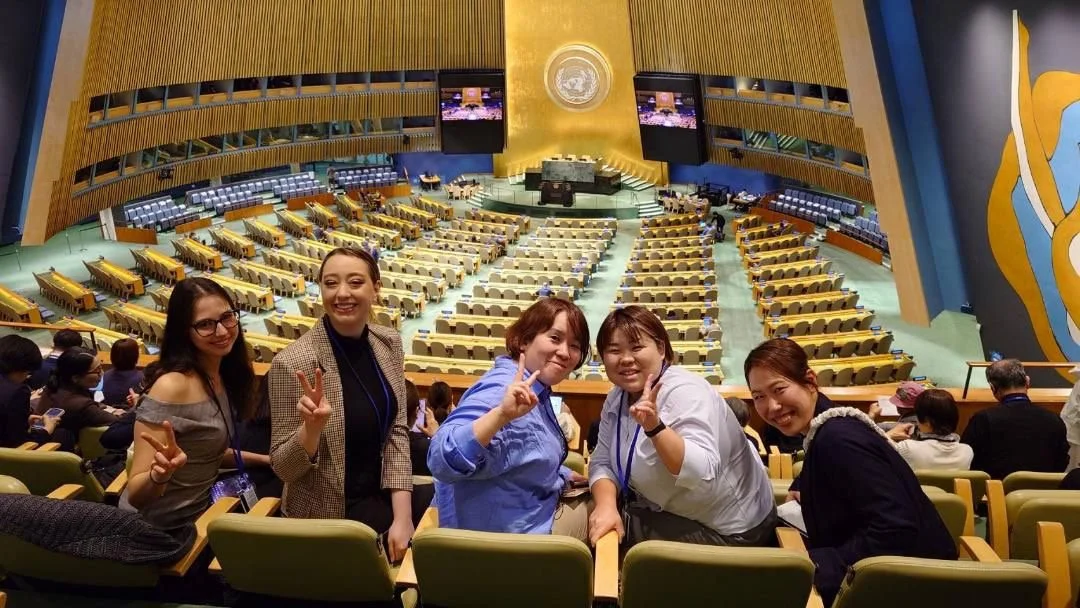
The President of Fordham University’s chapter poses with Japanese peace activists and Margaret Engel, Director of Policy and Outreach at PAFNYS.
Students who are part of the Campus Organizing Program participate in statewide and international advocacy work, but they also organize in their own communities. Here is what some of our chapters have been up to in the spring:
Chapter Highlights
Adelphi University
The chapter hosted “The War That Divided Us,” a hybrid panel discussion exploring the economic, environmental, and gendered impacts of war in the Global South. Through dialogue with guest speakers Kate Alexander and Junior Mbangala, students examined how conflict disproportionately harms women and undermines community resilience.
Amidst the violence carried out by the U.S. at home and abroad, the chapter facilitated a global peace roundtable that encouraged students to share diverse perspectives on international conflicts and diplomacy, fostering deeper campus engagement with complex global issues.
Canisius University
Canisius students hosted a campus discussion featuring Peace Action New York State President Jim Anderson on the role of education, organizing, and advocacy in confronting militarism and advancing peacebuilding efforts.
They also organized an open mic event that provided students with a creative outlet to express their perspectives on politics, global crises, and social justice through poetry, spoken word, music, and performance.

A chapter member at Columbia University shows off a Move the Money pen at Puzzling for Peace.
Columbia University
The chapter continued the chapter’s “Puzzling for Peace” tradition through an interactive event designed to demonstrate the importance of coalition-building and collaboration in advocacy work. Using games and political simulations, students explored how collective action strengthens organizing efforts.
They co-hosted a virtual webinar with immigration advocates and law students examining the realities of ICE enforcement, detention practices, and community-based legal support efforts.
Cornell University
Students hosted a peace-themed trivia and community-building event that encouraged students to engage with pressing global issues while collaboratively planning the chapter’s organizing priorities for the semester.
They organized a campus fundraiser benefiting the Malala Fund, raising $500 to support global advocacy efforts for girls’ education and educational access in developing countries.
Fordham University
Focusing on peace through local direct service, students collaborated with the Society for Ethical Culture to host an intergenerational community event focused on Black history, systemic oppression, and solidarity-building through music, storytelling, and dialogue.
They assembled and distributed 110 Easter baskets for foster youth and immigrant children supported by Abbott House, providing care packages filled with educational supplies, hygiene products, and recreational items.
Towards the end of the semester, they hosted a Women’s History Month program centered on gender oppression, empowerment, and violence prevention, helping students better understand the impacts of discrimination and avenues for support and advocacy.
Le Moyne College
PALM co-hosted a screening and discussion of The Voice of Hind Rajab with Students for Justice in Palestine, creating space for reflection and dialogue on the humanitarian impacts of war and occupation.
They welcomed Palestinian poet Mosab Abu Toha to campus for a powerful evening of poetry and discussion on loss, displacement, and life in Gaza, followed by a student-led Q&A and community dinner.
They also organized a campus bake sale fundraiser that raised money for the Workers Center of CNY, supporting local worker justice and immigrant advocacy initiatives.

Peace Action Le Moyne (PALM) students pose with Mosab Abu Toha, a Palestinian peace activist and poet.
Macaulay Honors College
The Macaulay Peace Action chapter relaunched with a general interest meeting that brought students together to discuss pressing issues including immigration enforcement, Gaza, and peace advocacy on campus.
Students hosted an ICE response and identification training in collaboration with Planet over Profit, equipping students with practical knowledge and resources related to immigration enforcement and community safety.
They also organized a large-scale art sale fundraiser benefiting Gaza Soup Kitchen, featuring handmade art, jewelry, portraits, and mutual aid efforts that mobilized students in support of humanitarian relief.
They strengthened coalition-building efforts through a community picnic and educational tour focused on the history of grassroots environmental activism in New York City’s Lower East Side.
Niagara University
The chapter successfully advocated for the university to revise its flag policy, resulting in the Haudenosaunee flag being raised on campus in recognition of Indigenous sovereignty and cultural significance.
They hosted a student-faculty discussion on Iran and U.S. foreign policy that encouraged accessible dialogue, critical thinking, and student engagement with international affairs.
They developed and distributed a Know Your Rights brochure to students across campus, with plans to expand the resource for broader community use. This brochure was presented at the Student Peace Conference.

Niagara students share their ICE Free Campus brochures at the Student Peace Conference.
Sarah Lawrence College
SLC students organized a campus advocacy and resource tabling event providing students with educational materials, whistles, red cards, and practical tools related to immigration defense and collective response.
They raised funds for families in Gaza through the sale of traditional Middle Eastern desserts while simultaneously expanding student outreach and local organizing efforts.
They also assembled hygiene kits for families in Westchester County impacted by ICE enforcement in partnership with Yonkers Mutual Aid, combining direct service with community education and resource-sharing.
SUNY Binghamton University
The chapter hosted a community film discussion of PBS’ documentary Bombshell that encouraged students to critically engage with themes related to media, politics, and social dynamics in an accessible and conversational setting.
They also organized a semester wrap-up presentation reviewing major global and political developments discussed throughout the year while strengthening chapter continuity and future organizing plans.
SUNY Buffalo State
They created a community-centered event focused on highlighting positive global and local developments, encouraging students to reflect on hope, resilience, and collective wellbeing during a period of heightened political stress.
Partnering with the Sustainability Club and campus faculty, they organized large-scale campus clean-up initiatives that promoted environmental stewardship, collaboration, and community engagement.
SUNY Geneseo
Students hosted a webinar featuring Pat McCormick, a Campus Organizing alumnus and member of the PAFNYS New Leadership Council, on ICE raids and immigrant advocacy, giving students firsthand insight into the impacts of immigration enforcement on local communities.
The chapter organized a campus-wide letter-writing and phone banking initiative connecting students directly with elected officials on multiple foreign policy issues.
They held the chapter’s second annual Women’s March in recognition of International Women’s Day, bringing students together in public demonstration and advocacy for women’s rights.
For the third time, they participated in the nationwide No Kings 3.0 rally alongside Genesee Valley Citizens for Peace, mobilizing more than 1,700 students and community members in collective protest and civic action.
They partnered with Young Democratic Socialists of America (YDSA) to organize a food drive supporting local community pantries, strengthening mutual aid efforts and addressing food insecurity in the region.

Peace Action Geneseo students marshall a community protest.
Our Campus Organizing Program is the flagship program of the Peace Action Fund of New York State, and we are constantly inspired by the passion and dedication our undergraduate students show.
Please support their work by donating today!
